Monday, July 30, 2012

Magic House

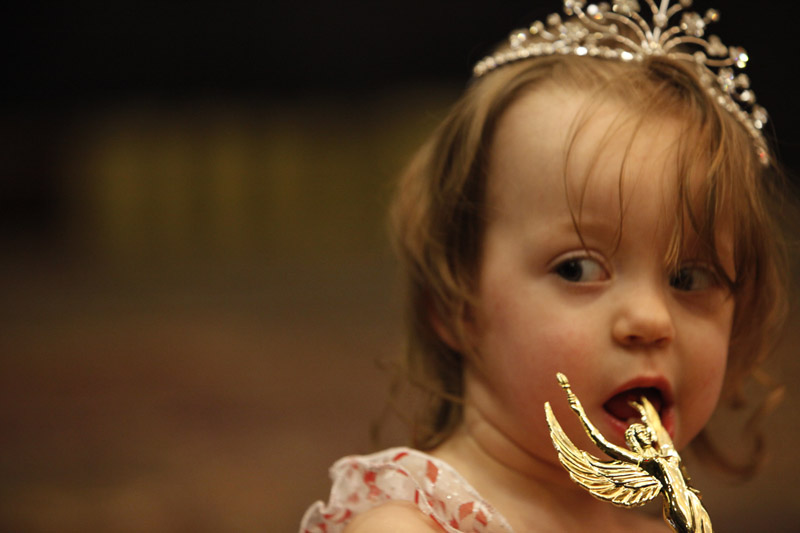
During a feature hunt last fall while I was a staffer for Columbia Missourian, I saw this house with many decorations in its yard. I knocked the door to see if I could get permission to photograph the house outside and inside. the owner was really nice and let me photograph his house from outside. Understandably he didn't let me in that day. This shoot never got published. Until today, it was buried in my archive. i think everyone should see this neat house. It is bizarre and beautiful at the same time.


Thursday, March 1, 2012

Reflection on the Photographic Essay Readings

Chapnick said, "great photographic essays do not need complex, bizarre, unusual subject matter. They need not be shot in exotic parts of the world. Almost every conceivable subject that deals with the human experience can serve as the basis for an essay." I think this is one major issue that we are dealing with in today's journalism. Easy access to photographic knowledge and gear, which leads to increasing number of image makers, we see even more examples of stories that were shot but not understood well or shot in different places for the sake of the location. Chapnick's approach here basically goes back to the idea of finding or rather actually being able to see the stories in our back yard. Personally, I definitelly went through this romantic view of photographic essays. As I grow up as a photographer, I am realizing more and more the importance of actually seeing/understanding a story or a subject and not be drawn to cool sounding/looking things.

That being said, Chapnick also mentioned that "Ferratois accepting and receptive rather than judgmental of the behavior of her subjects." This is also a very important point on the path that leads to well told photographic stories. I definitely think that being judgmental as a photographer and not being able to see what is in front of you have a strong relationship. A lot of us look out there for the stories because of our judgmental and despising attitude toward what is closer to us. Again, being able to overcome this specific kind of attitude is part of maturing process as a photographer and even in general as a human being.

Another good point made by Chapnick was about attention to details. He said, "the success of a photographic essay depends on attention to detail. The photographer should have a structure in mind, written or unwritten, as the essay unfolds. All along the way, the photographer should have a mental or written checklist against which the photographs are being made, so that when the work is finished there are no unfilled gaps in the story." This is something that we already have been talking about in our classes. During my shoot for the one-day story, I literally wrote down a shot list. It was the first time I did such a thing. Last semester, when I was doing the staff I always tried to pay attention to shooting almost every assignment like a picture story. But this time it was different. It was, I guess, a more structured approach, which helped mew fulfill almost all of my shot list. On the other hand, as I stated in my critique, because it was my first try, I feel like I missed the point making good, story telling images. Like everything else, it takes practice. I will just need to shoot more until it becomes a natural segment of my thinking when it comes to shooting.

Chapnick was a really good read. But I also greatly enjoyed the dialogue between Jay and Hurn. They also made some really good points. They say "photography is about communication." If we are not communicating anything with anyone, then what is the point? If we are not sharing any information with outside world, why do we bother to make images? And here, I am not talking about only documentary/photojournalistic images. Whether it is a, artistic photograph that was made by an artist for the purpose of saying something about oneself or reacting to a situation or it is a straight forward documentary image, we have to communicate. and we have to be clear about what we are saying through this visual device.

I really enjoyed reading this section as it made me see a different facade of image making process, which also relates to the fact that photojournalism must be about communicating what is there, what we witness. It shouldn't communicate what we think the reality should be. We shouldn't put our preconceptions between our lens and what is in front of the camera. Camera should be able to witness life as it is. And we should be able to somehow assist it recording moments from what is seen. I think it would be a great practice to play the memory game when we are about start a shoot. Taking a short moment, observing and asking ourselves "what I would remember from this place?" rather than what I wish it to be.

Later on they refer to photographer's memory vs. what is captured issue one more time as they stated above.


For a long time this was the story of my life. It was a terrible strategy to have as a photographer. Since last semester I have been trying to change this situation. I have been trying to determine what I am after before I start shooting. This has been leading me ask a lot more questions about what I shoot. And I think it's been a great help for me to edit other photographers' work as I have a lot of responsibility toward fellow photographers this semester at the Missourian.


Tuesday, February 28, 2012

POYi Reflection

Machine Man won the first place for Long-Form Multimedia Story. It is more of a photo essay on "modernity and global development", as the filmmakers stated.

The judges had some great discussion in this category about the narrative layering and cinematic/ journalist quality in multimedia pieces, chaptering big piece as in A Chance in Hell or A Darkness Visible/how it can work or not and the visual quality of the pieces. I could agree on most of their ideas, except for the first place winner.

Machine Man is definitely a great piece on some grand topic. On the other hand, for some reason, the filmmakers used this lensbaby and its strange distorting effect in this piece, which I still can't understand why. I don't see anything added to the story by the usage of this visual effect. And it definitely affected my pinion of the piece. I really liked the second place, A Chance in Hell and the third place, Half-Lives, winners. They were beautifully shot and very well put together.

I had mixed feelings about A Darkness Visible. I was already familiar with photographer's that specific work that he has been shooting for a really long time. They are amazing images. But I don't know if they work that well as a multimedia piece. It feels like there was a vast amount of work that was really good as still images and they wanted to see how they would look in a multimedia work.

One Day Picture Story Critique

I am not vet thrilled with what I've got from this shoot. It was a fun even to shoot. But I think my mind and eye got too busy with trying to fulfill the kind of shots and the variety that I need to get a picture story done. At the end I missed the main point of making good, story telling pictures.

Unfortunately, this was pretty much the very first time I approached an assignment this consciously in terms of visual story telling. Therefore I think it is not surprising that I got lost in the details. I am hoping as I continue shooting, this will become a natural part of my shooting.

I am planning to shoot something new and resubmit this assignment within this month.

Monday, February 27, 2012

One Day Picture Story-Mr. Mizzou

Chris Henry juggles three water bottles to practice before the Mr. Mizzou pageant
Wednesday, Feb 22, 2012 at his Columbia home. Henry learned juggling
from his father.

The sash for the winner of the Mr. Mizzou pageant is laid out on the table along
with the name sashes for the contestants before the contest Wednesday, Feb. 22, 2012
at Stotler Lounge in Memorial Union.
Five contestants of Mr. Mizzou pageant dance on the stage Wednesday evening,
Feb. 22, 2012 at Stotler Lounge in Memorial Union.
Audience, that consisted of mostly females, gives an applause while one of the
contestants shows his talent Wednesday evening, Feb. 22, 2012 at Stotler
Lounge in Memorial Union.

Chris Henry unties his tie after the Mr. Mizzou pageant Wednesday evening,
Feb. 22, 2012 at Stotler Lounge in Memorial Union.

Outtakes:
Chris Henry, right, walks on to the stage with Mizzou clappers along with Apollo Song Wednesday evening, Feb. 22, 2012 at Stotler Lounge in Memorial Student Union.

Five contestants of Mr. Mizzou pageant dance on the stage Wednesday evening,
Feb. 22, 2012 at Stotler Lounge in Memorial Union.

Saturday, February 11, 2012


These are probably the most brilliant lines I have read about photography in a long time. How pure the act pf making pictures should be and how all the egos should be pushed aside is pretty much summarized. Approaching your subject with a motherly curiosity and love but maybe excluding the protective attitude seems essential to make honest and intimate images. This sounds like the maturity level that each one of should eventually reach. Reading these lines reminded me works of Eugene Richards and Craig Walker. I have been fascinated with the amazing level of intimacy in their photography. It looks like Richards is up on the faces of his subjects yet somehow invisible. On the other hand Walker's work feels a bit more distant, not in a negative way, but still really honest. After reading these two paragraphs, what I feel about the photography of these guys started make more sense. They both put the subjects first, before themselves, which eventually leads to more honest images.

Also this part made me worry about my own MA project. Even though I still would like to shoot documentary images of my subjects, my reasoning behind shooting it started to seem too personal. Would rest of the world care about this? Why would they do? Yes, it might possibly help me or my subjects but what is the point that I am trying to make with it?

The two chapters from Bird by Bird are quite inspiring like always. According to Lamott, we can write about pretty much anything and everything, same in photography. We can photograph whatever we wants and we shouldn't suffer from lack of subject matter to focus on photographically. She also advices to get edited along the way, though. Have first drafts and edit them, go back and reshoot, find the missing points, try to figure out ways to fill in the gaps. It amazes me how pretty much everything she says about writing is applicable to photography. A great read!

Tuesday, February 7, 2012

POYi prep

After a six-month long break from blogging, I started again this semester as it is a requirement for my Picture Story class. After posting some course work, here is my first post upon a long silence.

This semester, I am working as one of the graduate coordinators for the Pictures of the Year International (POYi). My coworkers, Ben, Stuart and Caitie and I have been intensely working on the contest preparation for the past three weeks.


We moved to the Fred Smith Forum at the Reynolds Journalism Institute this past Sunday. After setting up everything, we spent last night and tonight finishing up the preparation of shows.

Tomorrow is the kick off. And, I can't wait to see the next three weeks of judging. It is going to be fun.

Monday, February 6, 2012

Road to the Crown


Saturday, January 28, 2012

Picture Story blog comment

I really enjoyed Madeline's Honey Pie post and Ellen's One in Eight Million. They are both beautiful in very different ways. Honey Pie, as Madeline said, is kind of creepy. It made me uncomfortable. It showed and taught me something that I had never seen or heard of. That video dragged me out of my comfort zone. The way it was made was also interesting to see. I really enjoyed the introduction of the subject through detail shots. It slowly built the mood by showing little chunks of images instead of showing the whole thing up front. Great way of telling a visual story. Basically they built up such a curiosity in me that I couldn't help but keep watching it. At the end, I already learned some about the subject but I wanted to know, which is a great thing experience.
And when I first watched Ellen's piece, all I could say was "what the f*!". Another well done visual piece but also great example of the kind of journalism, where one would find tiny bit awesome stories in their backyard.

They both taught me something new about our world. They both made me feel something for the subjects. Thank you for sharing these!

Thursday, January 26, 2012

Picture Story-1st Reflection

Lamott feels like she is speaking for me. She is speaking of all my personal experiences as a photographer. It is relieving to read somebody else talking about exact same experiences that I go through almost very day of my life. There are a lot of things that struck me in the first several chapters but the most compelling one for me is the one on perfectionism.

I have always take in as a good quality until this year. This year- I think as I am growing older towards the 30s-I started to realize how much it was hurting me as a photographer and an individual in general. As Lamott puts it, perfectionism is the biggest "obstacle" that one can put in front of herlelf/himself. It has created such a huge fear of failing in me that I have actually started either constantly failing or not trying at all, which is the worse than failing all the time. Perfectionism can be such an evil thing that paralyzes a person to the extent where she/he can't produce at all.

Also her idea of short assignments are greatly applicable to our field. Reading her lines actually encouraged me to assign myself two little assignments for this weekend. First one will be on our kitchen chairs. We have four old chairs at home around our awesome kitchen table. But almost every one of them are falling apart in the middle which causes a lot of back pain after sitting on them for extended hours during long sessions like now. So this weekend I would like to take a portrait photo of each one of these chairs at the same location and combine them in one frame and blog about it.

My second self assignment will be on the monster truck event this Saturday if I can fit it in my work schedule. I want to do a one day portrait project on the attendees of the event.

Tao of Photography was again a bit confusing for me. But there was one quote that I had to copy for myself:

“Don’t try to subdue a subject to your way of thinking- you can’t push a piano through a porthole. Go with the flow. Be flexible. Adapt. The scene will not adopt to you, as you will discover when viewing your pictures…. Don’t let your expectations project mirages that leave you thirsting. Release expectations. Defy assumptions. Unite with the scene to see not what you want to see, but what’s there. Then strengthen the strong points to build the photograph you want. Sometimes a situation will prove to be unphotogenic. Recognize when that happens and be on your merry way looking for something else.”

Derek Doeffinger - The Art of Seeing

I find this reminder quote so useful for starting photographers like us. I think, in the past, I had fallen into mistake of assumptions or projecting my ideas onto the subjects that I was photographing. I even used it a guideline that I created for Boone Life.


About Me

My photo
Ankara , Türkiye
I am a photographer and photo editor based in Ankara, Turkey. See more of my work here: http://pinaristek.virb.com/

Followers